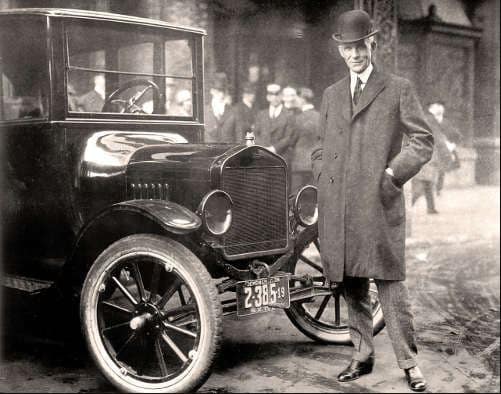
Introduction: A Vision Beyond Invention
Henry Ford is often remembered as the man who brought the automobile to the masses. However, his real genius went far beyond invention. He reimagined how the world could work. Not only did he build cars, but he also transformed industries, labor systems, and everyday life. From humble beginnings to global influence, Ford’s journey remains a timeless story of vision, persistence, and bold thinking.
Early Life: Humble Roots, Big Curiosity
Henry Ford was born in 1863 on a farm in Dearborn, Michigan. Although farm life taught him discipline and hard work, he was never truly drawn to agriculture. Instead, he was deeply fascinated by machines.
As a child, Ford spent countless hours dismantling and rebuilding mechanical devices. Because of this curiosity, he quickly developed a practical understanding of how things worked. Later, at the age of 16, he left home for Detroit to work as a machinist. These early experiences gradually exposed him to the growing industrial world and laid the foundation for his future breakthroughs.
Early Failures: Lessons Before Success
Despite his talent, Ford’s early career was filled with setbacks. His first two ventures the Detroit Automobile Company and the Henry Ford Company failed due to financial issues and disagreements with investors. At this point, many people would have quit.
However, Ford chose a different path. Instead of giving up, he treated each failure as a learning opportunity. Over time, these experiences sharpened his understanding of engineering, business, and leadership. More importantly, they strengthened his belief that automobiles should be affordable, reliable, and accessible to ordinary people not just the wealthy elite.
The Breakthrough: Founding the Ford Motor Company
In 1903, Henry Ford founded the Ford Motor Company with a clear and powerful mission: to build a car for the great multitude. Soon after, this vision became reality.
In 1908, Ford introduced the Model T, a simple yet durable and affordable automobile. As a result, transportation was no longer limited to the rich. Farmers, workers, and families gained new freedom and independence. Within just a few years, the Model T dominated the market and turned Ford into a household name.
Revolutionizing Manufacturing: The Assembly Line
While the Model T was revolutionary, Ford’s greatest contribution was how the car was made. In 1913, he introduced the moving assembly line a system that changed manufacturing forever.
Because of this innovation, production time dropped dramatically. What once took more than 12 hours could now be completed in about 90 minutes. Consequently, Ford was able to lower car prices while increasing profits. This win-win approach reshaped global manufacturing and became a model for industries worldwide.
Caring for Workers: The $5-a-Day Wage
At a time when factory wages were low and working conditions were harsh, Henry Ford once again surprised the world. In 1914, he introduced a $5-a-day wage, nearly double the industry standard.
Although this decision appeared generous, it was also strategic. Higher wages reduced employee turnover and improved productivity. Moreover, workers could now afford the very cars they built. Through this approach, Ford proved that treating employees well could also drive business success.
Global Impact: Changing Society Forever
Over time, Henry Ford’s influence extended far beyond automobiles. He helped create the modern middle class and reshaped urban planning across the world. As car ownership increased, roads, suburbs, supply chains, and consumer culture rapidly evolved.
Additionally, Ford’s ideas spread internationally. Manufacturers across industries adopted efficient production methods and began rethinking labor practices. In this way, Ford’s vision helped shape the modern industrial economy.
Challenges and Criticism: A Complex Legacy
Despite his achievements, Ford’s legacy was not without controversy. He resisted labor unions, held rigid views later in life, and struggled to adapt as the automotive industry evolved. These challenges highlight an important truth.
Even great innovators are human flawed, complex, and shaped by their time. Nevertheless, Ford’s contributions to industry and society remain undeniable.
Conclusion: Lessons from Henry Ford’s Success
Henry Ford’s success story offers powerful lessons that remain relevant today:
- Think differently and challenge existing systems
- Learn from failure instead of fearing it
- Innovate with purpose, not just for profit
- Empower people, because success follows strong teams
Ultimately, Henry Ford did more than build cars. From a curious farm boy to one of the most influential industrialists in history, he built a new way of life. His legacy continues to inspire entrepreneurs, innovators, and dreamers around the world.
About the Author