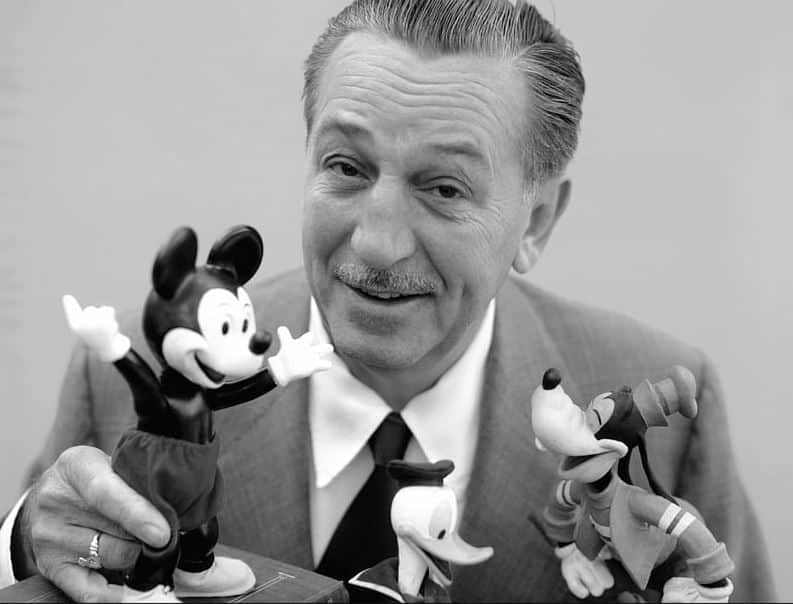
Walt Disney’s name is synonymous with imagination, creativity, and timeless storytelling. From humble beginnings to creating one of the world’s most influential entertainment empires, Disney’s journey is a powerful reminder that dreams, when backed by persistence, can truly change the world.
Early Life: A Childhood Shaped by Creativity
Walter Elias Disney was born on December 5, 1901, in Chicago, Illinois. Raised in a modest family, Walt showed an early interest in drawing and storytelling. Despite financial struggles and long working hours on his family’s farm, he found comfort in sketching and creating characters inspired by everyday life.
This passion for art would later become the foundation of his extraordinary career.
Early Struggles and Failures
Disney’s path to success was far from smooth. In his early twenties, he started a small animation studio that eventually went bankrupt. He was even fired from a newspaper for “lacking imagination”—a rejection that might have crushed most people.
Instead of giving up, Walt saw failure as a lesson. He moved to Hollywood with little money but a big vision, determined to start again.
The Birth of Mickey Mouse
In 1928, Walt Disney created Mickey Mouse, a cheerful and optimistic character that quickly captured hearts worldwide. Mickey’s debut in Steamboat Willie was revolutionary, as it was one of the first synchronized sound cartoons.
Mickey Mouse became the symbol of Disney’s belief that joy and hope could overcome adversity, and it marked the turning point in Walt’s career.
Innovation That Changed Entertainment
Walt Disney was not just an animator—he was an innovator. He introduced full-color animation, synchronized sound, and feature-length animated films. In 1937, Snow White and the Seven Dwarfs became the first full-length animated feature film, proving critics wrong and achieving massive success.
This bold risk redefined the animation industry forever.
Building the Disney Empire
Disney’s vision extended beyond films. He imagined a place where families could experience magic together, leading to the creation of Disneyland in 1955. Despite skepticism and financial challenges, the theme park became a global phenomenon.
From animation studios to theme parks and television, Walt Disney built an empire rooted in imagination and innovation.
Leadership, Vision, and Values
Walt Disney believed in pushing creative boundaries and empowering his team. He encouraged experimentation, embraced new technology, and maintained high standards of excellence. His leadership style inspired generations of artists, storytellers, and entrepreneurs.
Disney once said, “All our dreams can come true, if we have the courage to pursue them.”
Legacy That Lives On
Walt Disney passed away in 1966, but his legacy continues to thrive. Today, The Walt Disney Company stands as a global leader in entertainment, touching billions of lives across films, television, theme parks, and digital platforms.
More than a businessman, Walt Disney remains a symbol of optimism, creativity, and the power of dreams.
Conclusion: Lessons from Walt Disney’s Success
Walt Disney’s story teaches us that failure is not the end, innovation requires courage, and imagination has no limits. His journey from rejection to worldwide recognition is a timeless inspiration for dreamers everywhere.
About the Author