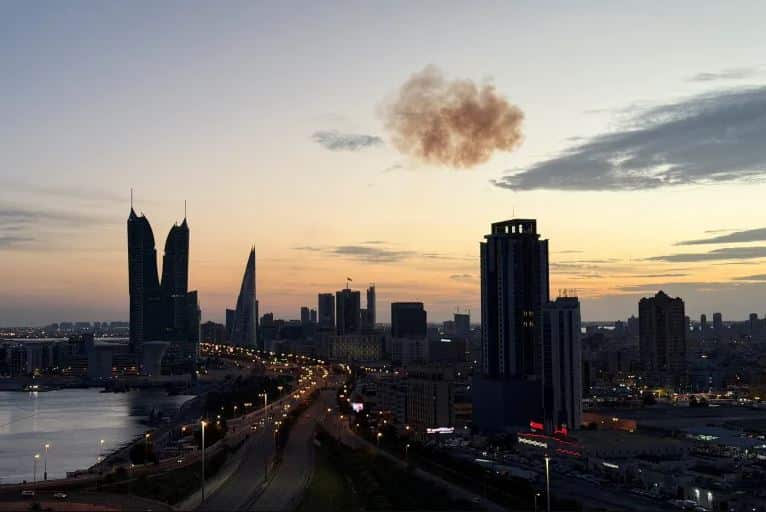
Regional Conflict Expands Beyond Israel and Iran
The conflict between Iran, Israel, and the United States is rapidly expanding across the Gulf region after a drone attack targeted an area housing the Embassy of Israel in Bahrain in Manama.
According to regional reports, an Iranian drone was intercepted near the Bahrain Financial Harbour Towers, a major commercial complex that hosts the Israeli diplomatic mission. The interception prevented damage, but the incident highlights how the conflict is spilling into countries hosting Western military infrastructure and diplomatic assets.
At the same time, Saudi Arabia reported intercepting a cruise missile near Al-Kharj Governorate, while additional drones were shot down near the Riyadh region. These developments suggest that the war is increasingly targeting critical Gulf security zones.
Strategic Targeting of Gulf Security Infrastructure
Military activity has also intensified in Doha, where Qatar intercepted a drone aimed at Al Udeid Air Base, the largest US military installation in the Middle East.
This base plays a central role in American air operations across the region. Any attempt to strike it signals a major escalation in Tehran’s retaliation strategy.
Explosions were reported in the Qatari capital during heightened security alerts, prompting authorities to urge residents to remain indoors and avoid exposed areas.
From a strategic standpoint, Iran’s apparent targeting pattern reflects a broader military message. Rather than focusing solely on Israel, Tehran is pressuring states that host US military assets or maintain security partnerships with Washington.
Iran’s Regional Pressure Strategy
The attacks illustrate a key feature of Iran’s regional doctrine. Tehran often relies on distributed pressure across multiple theaters rather than a single large battlefield confrontation.
Countries now caught in the conflict’s strategic radius include
- Bahrain
- Saudi Arabia
- Qatar
- Turkiye
- Azerbaijan
This pattern reflects Iran’s attempt to increase the cost of military operations against it by expanding the geographic scope of potential retaliation.
For Gulf governments, the risk is that hosting American bases or Western diplomatic missions may increasingly place them on the front line of the confrontation.
The Gulf’s Strategic Dilemma
The Gulf states now face a difficult strategic balancing act.
Most members of the Gulf Cooperation Council maintain strong security partnerships with Washington while simultaneously trying to avoid becoming direct participants in a regional war.
The current wave of drone and missile interceptions demonstrates the vulnerability of Gulf infrastructure. Critical facilities such as energy installations, air bases, and diplomatic missions are concentrated within relatively small geographic areas.
This makes them attractive symbolic targets for retaliation during periods of escalation.
European Response and International Concerns
European officials have also raised alarm over the growing instability. Leaders from the European Union expressed support for Gulf nations facing missile and drone attacks.
EU foreign policy chief Kaja Kallas and other European leaders held discussions with Gulf officials in Brussels, condemning what they described as Iranian attacks on regional partners.
European governments fear that further escalation could threaten global energy flows, maritime security, and diplomatic stability across the Middle East.
Why This Escalation Matters for Global Security
The current stage of the conflict represents more than isolated drone or missile strikes. It indicates a transition toward a regional confrontation involving multiple states and military infrastructures.
Three major strategic risks now define the situation.
First, attacks on US bases could trigger direct American retaliation.
Second, Gulf states may be forced into deeper military coordination with Western forces.
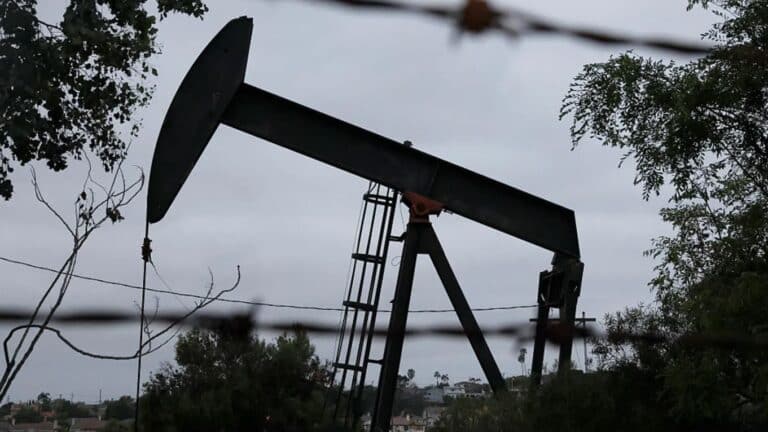
Third, the conflict could threaten oil infrastructure and global energy markets.
Each of these factors significantly increases the potential for the war to expand beyond the Israel Iran axis.
Key Takeaways
The attempted strike near the Israeli embassy in Bahrain highlights a growing regionalization of the conflict.
Iran appears to be signaling that countries hosting US forces or strategic Western assets may face pressure if the war continues.
For Gulf states, the challenge is no longer whether the conflict will affect them. The challenge is how deeply they may be drawn into it.
About the Author