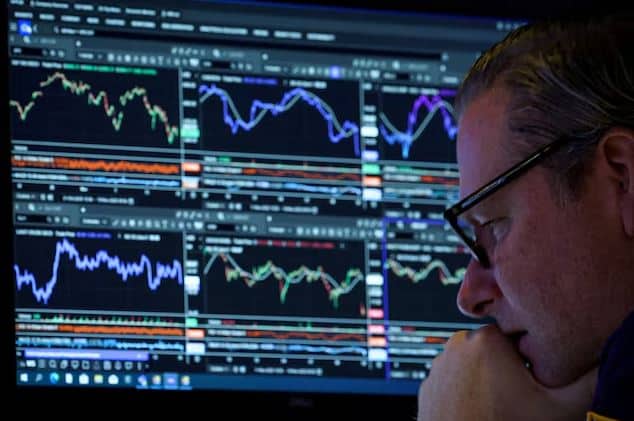
What Happened to Bitcoin Prices on February 23, 2026
Bitcoin dropped as much as 5% on Monday, briefly falling below $65,000 after President Donald Trump announced plans to raise global tariffs to 15%. The world’s largest cryptocurrency, which had already been under sustained selling pressure since October 2025, extended its losses into the new trading week as investors reacted swiftly to renewed policy uncertainty.
By early morning EST, Bitcoin had partially recovered to around $65,615, still down approximately 2.6% on the day. Ether, the second largest cryptocurrency by market cap, fell 3.3% to $1,878 during the same period.
Why Bitcoin Dropped: Tariffs, Military Tension, and Weak Market Conviction
Trump’s 15% Global Tariff Announcement
The immediate trigger for Monday’s selloff was the White House announcement of sweeping global tariff increases. Jeff Mei, COO at blockchain technology company BTSE, explained that the sudden uptick in tariff rates is pushing investors to exit crypto positions ahead of a potentially deeper market decline.
The logic here is straightforward. Higher tariffs slow trade, raise costs for businesses and consumers, and historically increase volatility across risk assets. Crypto, which behaves as a high-beta risk asset during periods of uncertainty, tends to be among the first assets sold when macro risk rises.
U.S. Military Buildup Near Iran
Beyond tariffs, investors are watching the Middle East closely. The Trump administration has significantly increased U.S. military presence in the region, and on Thursday last week, the president signaled he could decide within 10 days whether to launch strikes against Iran. Any armed conflict there would disrupt global trade flows and energy markets, adding another layer of uncertainty that weighs on crypto sentiment.
Thin Liquidity and Low Market Conviction
Markus Thielen, head of research at 10x Research, pushed back on attributing the drop to a single headline. In his analysis, the selloff reflects a deeper structural problem: the market is operating in a low-volume, low-conviction environment consistent with a classic bear market phase. He points to uncertainty around U.S. midterm elections as an additional overhang, and expects Bitcoin could slide further toward $50,000 before forming a more durable bottom.
Bitcoin’s Broader Decline: From $125,000 to $65,000
Monday’s drop did not occur in isolation. Bitcoin crossed $125,000 in October 2025, setting a new all-time high before entering a prolonged downtrend. Since that peak, Bitcoin has shed more than 47% of its value. Year to date in 2026, it is down roughly 26%.
On February 5, Bitcoin hit a more than one-year low of $63,119.80, signaling that bearish momentum had not yet run its course heading into mid-February.
Bitwise Chief Investment Officer Matt Hougan offered a structural explanation for the slide earlier this month. He pointed to the cryptocurrency market’s historical four-year cycle, noting that the current retracement mirrors patterns from prior downturns. Hougan identified several contributing factors: investors rotating capital into gold and artificial intelligence stocks, uncertainty around Fed governor nominee Kevin Warsh, and lingering concerns about quantum computing risk to cryptographic security. Bitwise manages more than $15 billion in assets and is heavily focused on crypto ETFs.
Bitcoin vs. Gold: A Divergence That Matters
One of the most notable dynamics on Monday was how differently Bitcoin and gold responded to the same macro shock. While Bitcoin fell sharply, spot gold rose more than 1%, benefiting from traditional safe-haven demand.
This divergence is significant because Bitcoin has long been marketed as “digital gold,” a label even Federal Reserve Chair Jerome Powell has used. But Monday’s price action reinforced a pattern that has repeated throughout 2025 and into 2026: in times of genuine macro stress, investors treat physical gold as a refuge and Bitcoin as a risk asset they exit.
For Bitcoin to reclaim its “store of value” narrative, it will need to demonstrate consistent behavior as a hedge during periods of uncertainty rather than amplifying the fear already present in equity and commodity markets.
What Analysts Are Watching Next
Several factors will shape Bitcoin’s trajectory over the coming weeks.
The first is the tariff situation itself. A 15% universal tariff is aggressive, and markets will be watching whether trading partners retaliate, whether the policy is phased in or immediate, and whether negotiations follow. The outcome will determine how much lasting damage is done to global growth expectations.
The second is the Iran situation. A military escalation would almost certainly send oil prices higher and risk assets lower, including crypto. A de-escalation or diplomatic resolution could provide relief.
Third, the technical picture matters. Bitcoin is trading near a zone that has previously attracted buyer interest, but Thielen’s $50,000 target signals that professional traders are not convinced a bottom is in. Volume and on-chain data will be critical in gauging whether institutional buyers step in or stand aside.
Frequently Asked Questions
Why did Bitcoin fall on February 23, 2026? Bitcoin dropped after President Trump announced plans to raise global tariffs to 15%, which increased uncertainty across risk markets. Additional factors included U.S. military buildup near Iran and a broader low-conviction trading environment.
How much has Bitcoin fallen from its all-time high? Bitcoin reached an all-time high above $125,000 in October 2025. As of February 23, 2026, it has lost more than 47% from that peak.
Is Bitcoin still a safe-haven asset like gold? Not consistently. Monday’s price action showed Bitcoin falling 5% while gold rose more than 1% during the same session. Analysts and market data suggest Bitcoin currently behaves more like a high-risk growth asset than a traditional store of value during periods of macro stress.
Where could Bitcoin go next? Analysts at 10x Research expect further downside toward $50,000 before the market finds a more sustainable bottom. The timeline depends heavily on tariff developments, geopolitical events, and overall market liquidity.
What is the four-year crypto market cycle? The four-year cycle theory, referenced by Bitwise CIO Matt Hougan, holds that Bitcoin moves through predictable phases of expansion and contraction roughly every four years, often tied to Bitcoin’s halving events. The current downturn, in this framework, mirrors declines seen in previous cycles before eventual recoveries.
“Write a news report based on an exclusive interview with a world leader conducted at their government headquarters during an ongoing war. The leader expresses firm defiance against enemy territorial demands, warns that any ceasefire would only give the opposing side time to recover and continue aggression, and argues that intense military and economic pressure is the only path to lasting peace. Include direct quotes from the leader, journalist follow-up questions, and geopolitical context. Write in a serious, professional journalistic tone.”
About the Author