Finance at the Center of Korea’s Economic Leap
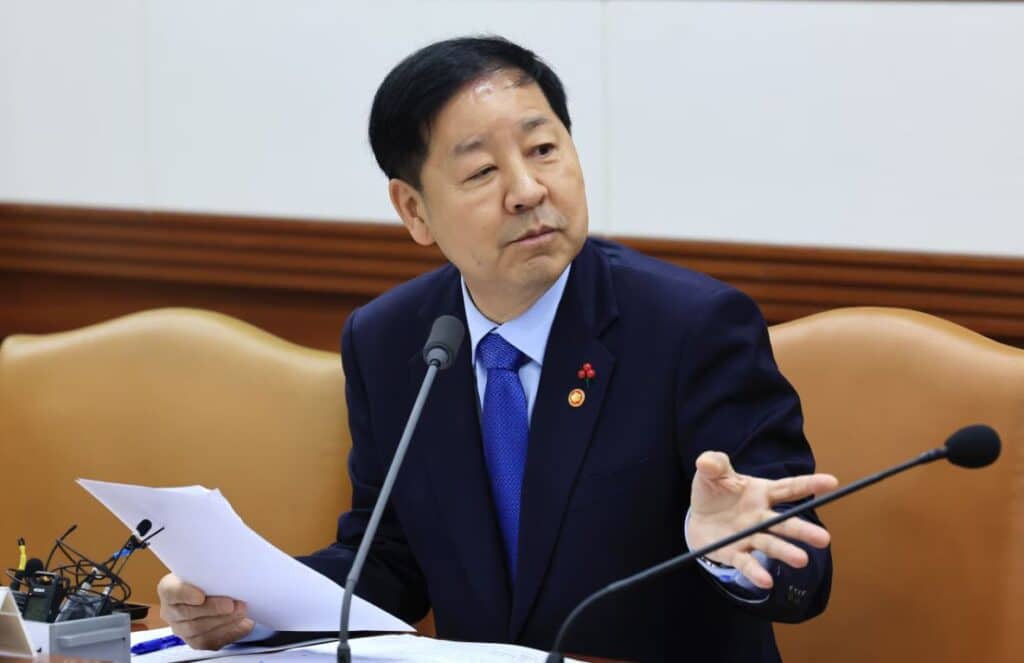
South Korea’s Deputy Prime Minister for Economic Affairs and Finance Minister, Koo Yun-cheol, has called for a major shift in how money flows across the economy. He urged financial institutions to channel more capital into technology-driven sectors, ventures, and startups. This move, he said, is essential to kick-start what the government calls “productive finance.”
Speaking at the Pan-Finance New Year’s Gathering at Lotte Hotel in Seoul, Koo said 2026 must become a turning point for the Korean economy. According to him, the country needs to revive its growth potential while reducing economic polarization. As a result, he stressed that finance will play a decisive role in shaping Korea’s future.
Three Core Policy Directions for 2026
To guide this transformation, Deputy Prime Minister Koo outlined three key policy priorities for the year ahead.
First, the government will focus on expanding productive finance. Second, it aims to achieve shared growth through finance. Finally, authorities will place strong emphasis on strengthening risk management.
Together, these pillars are designed to redirect capital away from speculation. Instead, funds will move toward sectors that can deliver sustainable and long-term growth.
₩30 Trillion Public Growth Fund to Fuel New Industries
At the center of the productive finance plan is the launch of a Public Growth Fund. The government will supply this fund at an annual scale of 30 trillion won.
Importantly, the fund will target future-oriented industries, including artificial intelligence and other advanced technologies. In addition, the government plans to expand tax incentives for venture and innovation capital.
These measures will support Business Development Companies (BDCs) and KOSDAQ venture funds. Consequently, they will encourage long-term investment in high-growth enterprises.
Boosting Capital Markets and Investor Confidence
Meanwhile, the government is moving to strengthen Korea’s capital markets. Koo announced plans to expand tax benefits for long-term domestic stock investments. He also confirmed the introduction of low-rate separate taxation on dividend income.
Moreover, authorities will soon release a roadmap for South Korea’s inclusion in the MSCI Developed Markets Index. This step is widely seen as a major boost for global investor confidence.
At the same time, the government will intensify efforts to create a fair market environment. In particular, regulators will step up crackdowns on stock price manipulation and other unfair trading practices.
Shared Growth: Supporting SMEs, Youth, and Vulnerable Groups
Beyond economic growth, the government is placing strong emphasis on financial inclusivity. Koo said win-win finance programs will expand to support small and medium-sized enterprises and venture companies.
In addition, the administration will strengthen social solidarity finance. This will benefit cooperatives and social enterprises across the country.
For low-income groups, policy-based financial support will also grow. Notably, the government plans to pilot a 4.5% Smile Finance loan product for young people, offering more affordable access to credit.
Risk Management and Financial Stability Remain Key
At the same time, Koo underlined the importance of financial stability. Authorities will closely monitor financial and foreign exchange markets.
Furthermore, the government will work to resolve structural supply-demand imbalances in the FX market. It will also continue efforts to keep household debt on a downward path.
As a result, policymakers aim to strengthen economic resilience while maintaining market stability.
A Finance-Led Path Toward Sustainable Growth
In conclusion, Deputy Prime Minister Koo made one message clear. Finance must move beyond short-term gains and actively support Korea’s long-term future.
By directing funds toward technology, innovation, and inclusive growth, the government hopes to build a stronger, fairer, and more resilient economy for the years ahead.
About the Author